Attribution Creative Commons Noncommercial No Derivatives Share Alike Zero

Solo Shemal Sex High Quality 〈480p〉

Long conversations, shared philosophies, and deep emotional safety serve as the foundation before any physical intimacy occurs. Crafting Compelling Romantic Storylines

– The protagonist's fantasies and reality blur, creating mystery about which romantic encounters are real and which are imagined.

The digital media landscape is undergoing a significant cultural shift. Rapid, high-volume consumption is increasingly being supplemented by narrative-driven, emotionally resonant content. Across various digital niches, there is a growing demand for "high-relationship" storylines—content that prioritizes deep, respectful, and highly romantic narratives over simple visual performance.

I'll provide a comprehensive write-up on solo female travel, focusing on personal growth, self-discovery, and romantic storylines. solo shemal sex high quality

High relationships, in particular, can be a significant aspect of the solo travel experience. These relationships often involve intense emotional connections, passionate encounters, or deep conversations. While high relationships can be exhilarating, they can also be complicated, especially when they involve power imbalances, cultural differences, or conflicting expectations.

The balance between maintaining personal identity and merging lives with another person. 2. High-Stakes Social Dynamics

feature trans women—like Elle Argent—experiencing first crushes and supportive friendships, moving the focus from medical transition to emotional fulfillment. Real-Life Inspirations The Trans/Romance Dilemma in Transamerica and Other Films High relationships, in particular, can be a significant

– In satisfying narratives, solo exploration eventually connects to real romantic experiences, showing growth and fulfillment.

– Friends, rivals, parents, and teachers provide context and conflict. Their reactions to the protagonist shape the romantic possibilities.

Here is a look at why this specific narrative genre is captivating audiences and how developers create unforgettable digital bonds. The Power of Intimacy in Solo Gaming Reputation and Social Standing

In conclusion, solo female travel offers a transformative experience that can lead to personal growth, self-discovery, and romantic storylines. As women continue to embark on solo journeys, they are redefining the notion of travel and relationships, embracing a more independent and empowered approach to life.

– Niche communities like TGComics or Fictionmania focus specifically on transgender narrative content.

Romance in these games is rarely a straight line. Players must balance two distinct stats: (romantic/sexual attraction) and Trust (emotional security). For a trans protagonist, trust mechanics are uniquely vital. Building trust often unlocks deeper dialogue options where the character can share her past, her fears, and her true self without judgment. 2. Reputation and Social Standing
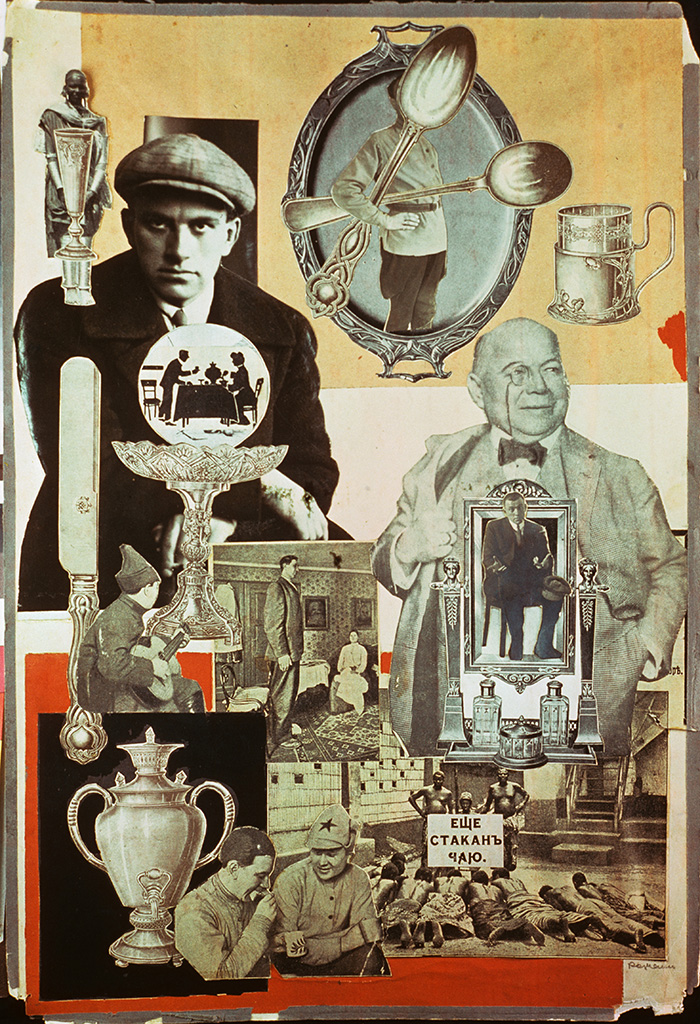
Fig. 1. — Brigade KGK (Viktor Koretsky [1909–98], Vera Gitsevich [1897–1976], and Boris Knoblok [1903–84]). “We had to overcome among the people in charge of trade the unhealthy habit of distributing goods mechanically; we had to put a stop to their indifference to the demand for a greater range of goods and to the requirements of the consumers.” From the 16th to the 17th Congress of the All-Union Communist Party (Bolsheviks), 1934, no. 57, gelatin silver print, 22.7 × 17 cm. Los Angeles, Getty Research Institute, 2014.R.25.
Fig. 2. — Brigade KGK (Viktor Koretsky [1909–98], Vera Gitsevich [1897–1976], and Boris Knoblok [1903–84]). “There is still among a section of Communists a supercilious, disdainful attitude toward trade in general, and toward Soviet trade in particular. These Communists, so-called, look upon Soviet trade as a matter of secondary importance, not worth bothering about.” From the 16th to the 17th Congress of the All-Union Communist Party (Bolsheviks), 1934, no. 56, gelatin silver print, 22.7 × 17 cm. Los Angeles, Getty Research Institute, 2014.R.25.
Collage of photographs showing Vladimir Mayakovsky surrounded by a silver samovar, cutlery, and trays; two soldiers enjoying tea; a giant man in a bourgeois parlor; and nine African men lying prostrate before three others who hold a sign that reads, in Cyrillic letters, “Another cup of tea.”
Fig. 3. — Aleksandr Rodchenko (Russian, 1890–1956). Draft illustration for Vladimir Mayakovsky’s poem “Pro eto,” accompanied by the lines “And the century stands / Unwhipped / the mare of byt won’t budge,” 1923, cut-and-pasted printed papers and gelatin silver photographs, 42.5 × 32.5 cm. Moscow, State Mayakovsky Museum. Art © 2024 Estate of Alexander Rodchenko / UPRAVIS, Moscow / ARS, NY. Photo: Art Resource.
Fig. 4. — Boris Klinch (Russian, 1892–1946). “Krovovaia sobaka,” Noske (“The bloody dog,” Noske), photomontage, 1932. From Proletarskoe foto, no. 11 (1932): 29. Los Angeles, Getty Research Institute, 85-S956.
Fig. 5. — Brigade KGK (Viktor Koretsky [1909–98], Vera Gitsevich [1897–1976], and Boris Knoblok [1903–84]). “We have smashed the enemies of the Party, the opportunists of all shades, the nationalist deviators of all kinds. But remnants of their ideology still live in the minds of individual members of the Party, and not infrequently they find expression.” From the 16th to the 17th Congress of the All-Union Communist Party (Bolsheviks), 1934, no. 62, gelatin silver print, 22.7 × 17 cm. Los Angeles, Getty Research Institute, 2014.R.25.
Fig. 6. — Brigade KGK (Viktor Koretsky [1909–98], Vera Gitsevich [1897–1976], and Boris Knoblok [1903–84]). “There are two other types of executive who retard our work, hinder our work, and hold up our advance. . . . People who have become bigwigs, who consider that Party decisions and Soviet laws are not written for them, but for fools. . . . And . . . honest windbags (laughter), people who are honest and loyal to Soviet power, but who are incapable of leadership, incapable of organizing anything.” From the 16th to the 17th Congress of the All-Union Communist Party (Bolsheviks), 1934, no. 70, gelatin silver print, 22.7 × 17 cm. Los Angeles, Getty Research Institute, 2014.R.25.
Fig. 7. — Artist unknown. “The Social Democrat Grzesinski,” from Proletarskoe foto, no. 3 (1932): 7. Los Angeles, Getty Research Institute, 85-S956.
Fig. 8A. — Pavel Petrov-Bytov (Russian, 1895–1960), director. Screen capture from the film Cain and Artem, 1929. Image courtesy University of California, Berkeley, Berkeley Art Museum and Pacific Film Archive Library.
Fig. 8B. — Pavel Petrov-Bytov (Russian, 1895–1960), director. Screen capture from the film Cain and Artem, 1929. Image courtesy University of California, Berkeley, Berkeley Art Museum and Pacific Film Archive Library.
Fig. 8C. — Pavel Petrov-Bytov (Russian, 1895–1960), director. Screen capture from the film Cain and Artem, 1929. Image courtesy University of California, Berkeley, Berkeley Art Museum and Pacific Film Archive Library.
Fig. 9. — Herbert George Ponting (English, 1870–1935). Camera Caricature, ca. 1927, gelatin silver prints mounted on card, 49.5 × 35.6 cm (grid). London, Victoria and Albert Museum, RPS.3336–2018. Image © Royal Photographic Society Collection / Victoria and Albert Museum, London.
Fig. 10. — Aleksandr Zhitomirsky (Russian, 1907–93). “There are lucky devils and unlucky ones,” cover of Front-Illustrierte, no. 10, April 1943. Prague, Ne Boltai! Collection. Art © Vladimir Zhitomirsky.
of