Thank you

A Product Trainer will contact you within two business days to schedule a one-on-one training session.
Below is a comprehensive guide to what these specific Rocscience tools do, their core capabilities, and how to access them safely. Key Rocscience Software Tools Explained
: Uses Fuzzy C-Means clustering to automatically group orientation data into distinct joint sets.
Dips 6.0 offers powerful kinematic analysis, allowing for the analysis of planar, wedge, and toppling stability, making it essential for rock mechanics.
: Analyzes how changing the axis of an excavation impacts wedge sizes and safety factors, allowing engineers to pick the safest tunnel alignment. Technical Integration and Engineering Workflow Below is a comprehensive guide to what these
Settle3D v20 introduces the Dynamic Compaction Ground Improvement Method , simulating the densification of loose soil.
The consists of specialized geotechnical tools used globally for civil and mining engineering. While older versions like Dips 6.0 , Settle3D v2.0 , Slide 6.0 , and Unwedge 3.0 laid the groundwork for modern rock and soil mechanics analysis, they have since been succeeded by more advanced versions (such as Dips v9 , Settle3 , Slide2 , and Unwedge 4 ).
Automatically groups pole data into sets to define joint families. : Analyzes how changing the axis of an
Models the reinforcing effects of mechanically anchored or grouted rock bolts.
Employs Fisher distributions to calculate mean orientations of joint sets.
: Seamlessly integrates soil nails, rock bolts, geotextiles, and anchors to evaluate stabilization designs. 4. Rocscience UnWedge: Underground Rock Wedge Assessment While older versions like Dips 6
Identifies potential rock slope failure modes, including planar sliding, wedge sliding, and flexural toppling.
Features include modeling ground improvement through dynamic compaction, simulating the energy from repeated heavy tamping to enhance soil properties.
A Product Trainer will contact you within two business days to schedule a one-on-one training session.
We’ve received your request for technical support. A Technical Support Specialist will contact you within 1 business day.
Your Target Market Request form has been sent. Your SocialCRM support agent will contact you to discuss any specifics, if needed.
Thank you for your interest in Mitchell 1 products. A Customer Service Agent will contact you within 1 business day.
Please allow 30 business days for your request to be processed.
We’ve received your request for assistance with your Mitchell 1 account. A Customer Service Agent will contact you within 1 business day.
We’ve received your request for a call back. A Customer Service Agent will contact you within 1 business day.
Thank you for contacting Mitchell 1 to discuss data integration opportunities. Clients who meet the requirements will be contacted to discuss a potential opportunity.
Your upgrade request for Accounting Link has been received. A Customer Service agent will contact you shortly.
Your details have been successfully submitted!
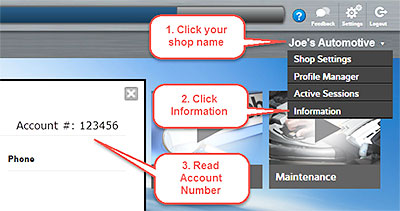
Direct Access—Pass-Through (transfer ticket) streamlines access straight into ProDemand Truck. Depending on the configuration, this workflow uses the user/password credentials or an account number. Your users can launch into ProDemand Truck, assuming they already have an active subscription.
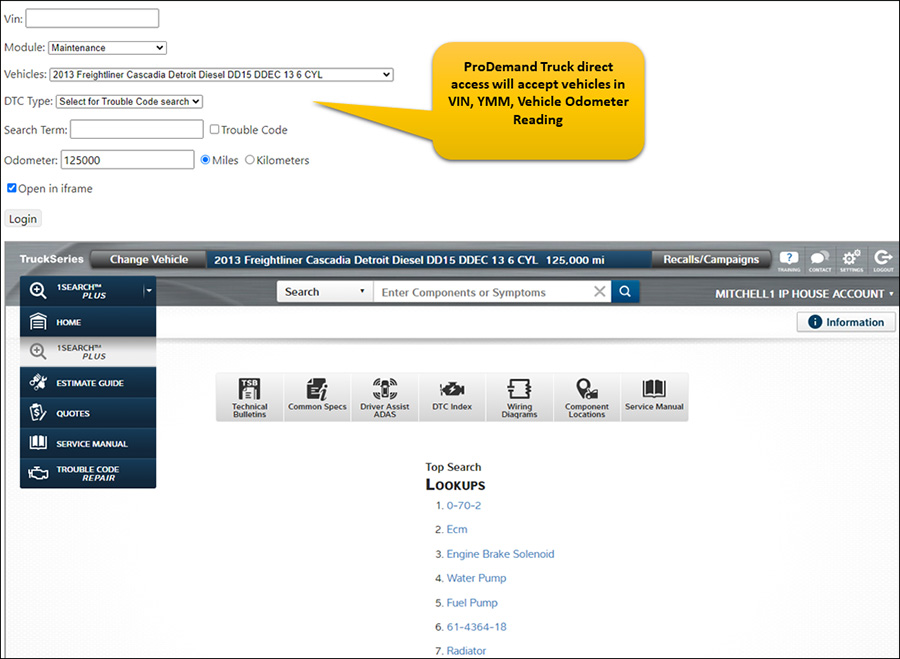
ProDemand Medium and Heavy-Duty Truck Class 4-8 has the following mechanisms for application-level integration with our repair content: (Labor)
Your users can launch the ProDemand Medium & Heavy-Duty Truck UI sub-sections, assuming they already have an active subscription.
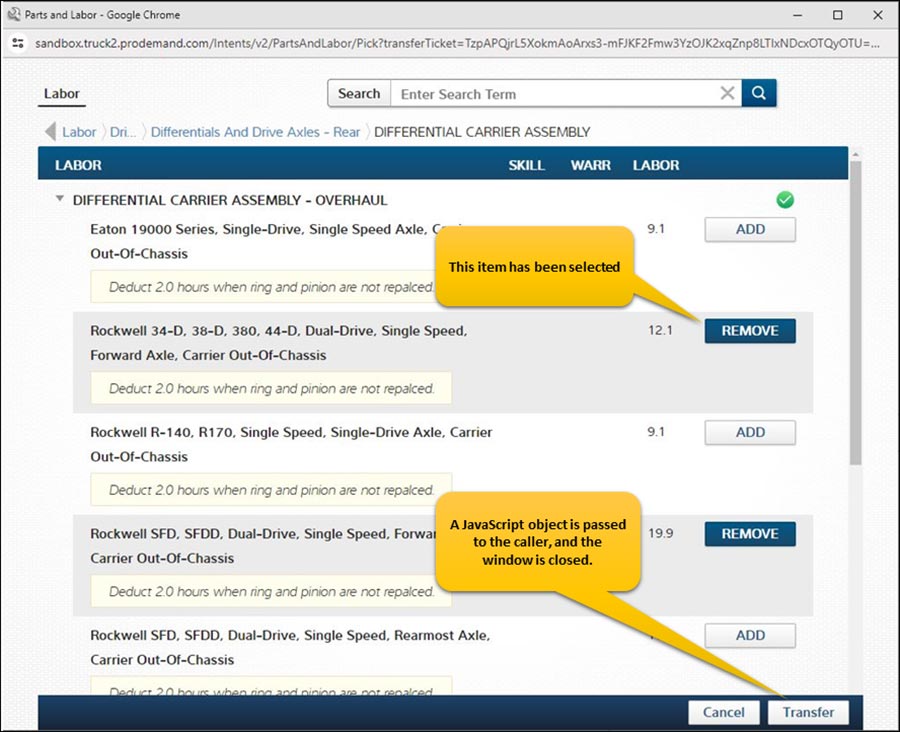
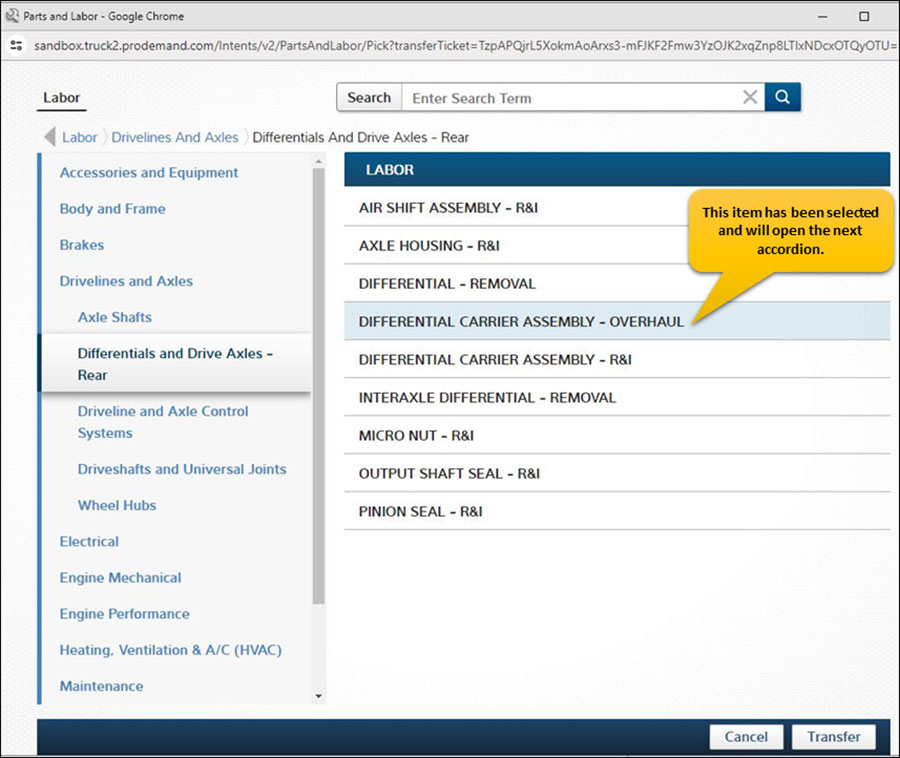
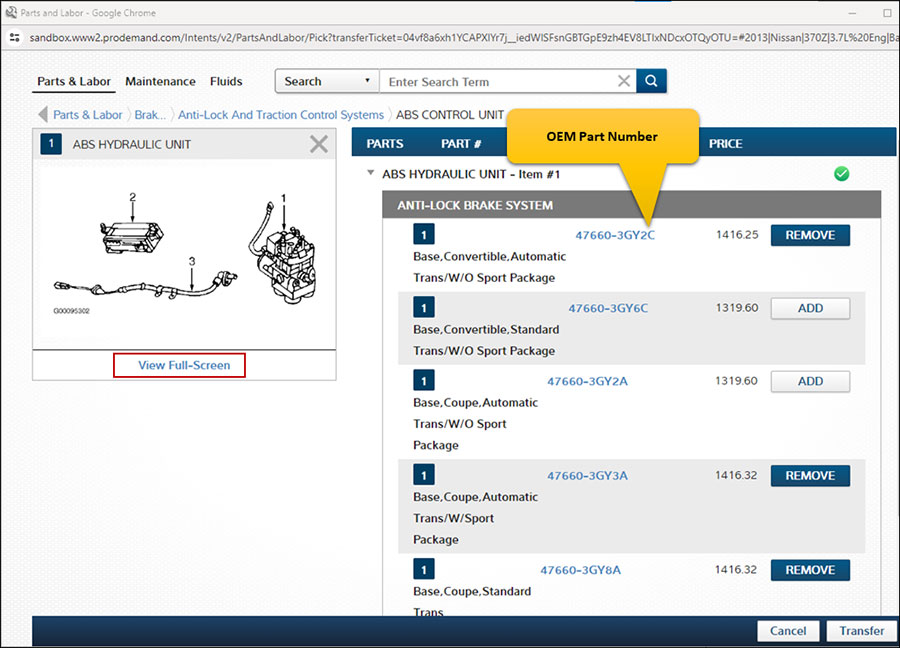
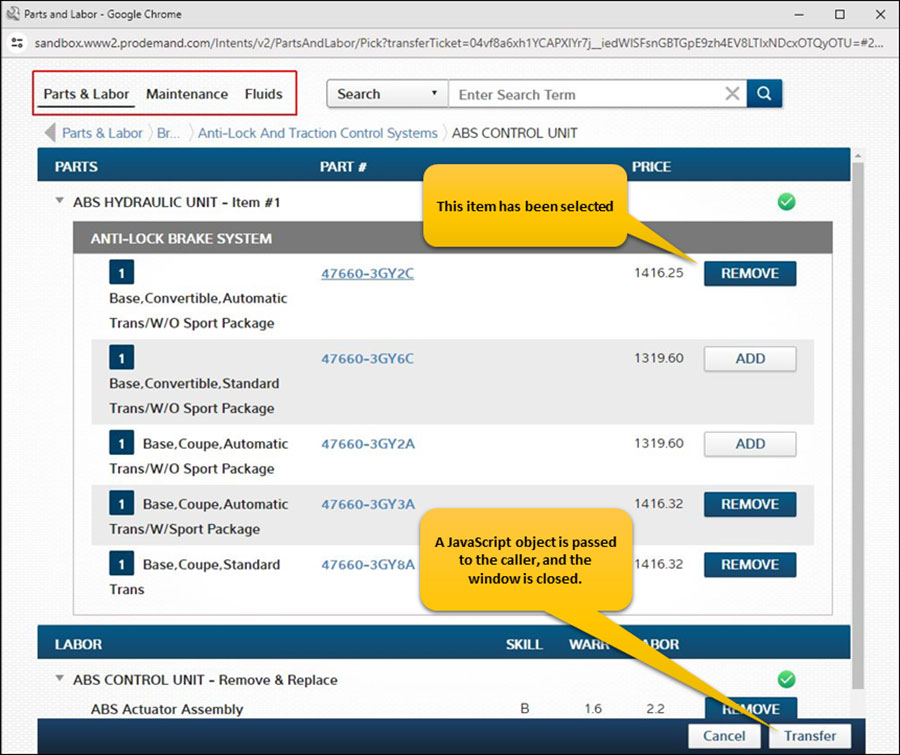
Direct Access—Pass-Through (transfer ticket) streamlines access straight into ProDemand. Depending on the configuration, this workflow uses the user/password credentials or an account number. Your users can launch into ProDemand, assuming they already have an active subscription.
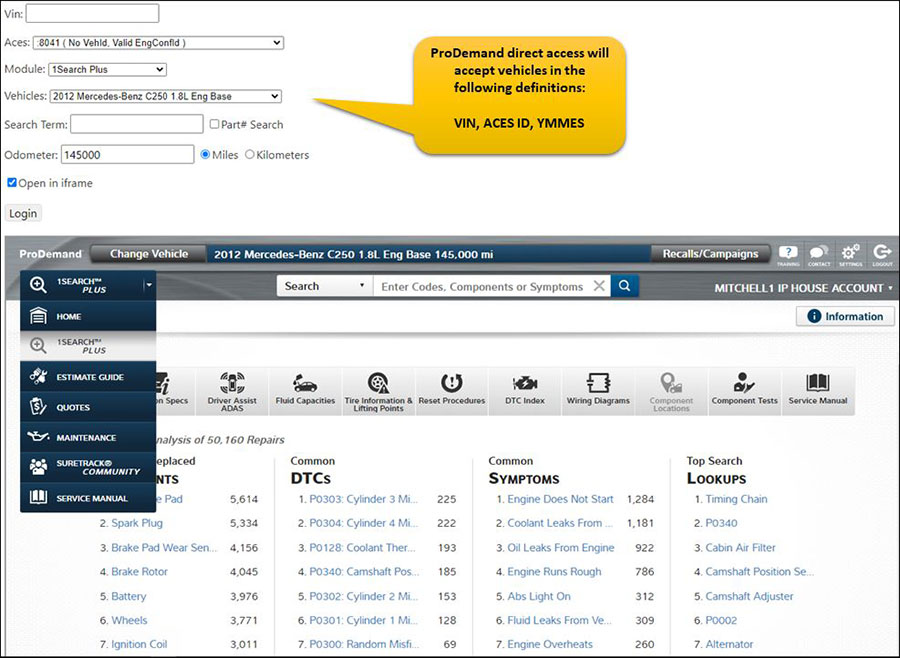
ProDemand Light Duty Automotive has the following mechanisms for application-level integration with our repair content: (Labor, Parts, Fluids, and Maintenance) Your users can launch the ProDemand Light Duty UI sub-sections, assuming they already have an active subscription.